About St. John’s
Welcome to SJH
Welcome to St. John's Huntington! We are people of all ages and backgrounds who call this parish community “home.”
We value our rooted and joyful worship, excellent preaching and teaching, intentional service, and abundant hospitality. We are pilgrims on a journey of faith to discover God in our lives, and our goal is to seek and serve Christ in anyone we encounter. All (yes, that means you) are welcome to join in the story God is writing within and beyond our walls. You belong here.
SJH is an Episcopal Church founded in 1745 by Samuel Seabury, who later became the first bishop in the Episcopal Church. We are part of the Episcopal Diocese of Long Island and the worldwide Anglican Communion, whose historical and spiritual root is traced to Canterbury in the Church of England.
Since its foundation, SJH has been an integral part of Huntington Village and its history, and it continues to serve the community with various outreach services and activities. Welcoming and serving others is central to our faith and life. Come and see what it means to encounter the love of Jesus in our community!
Clergy, Staff, and Vestry
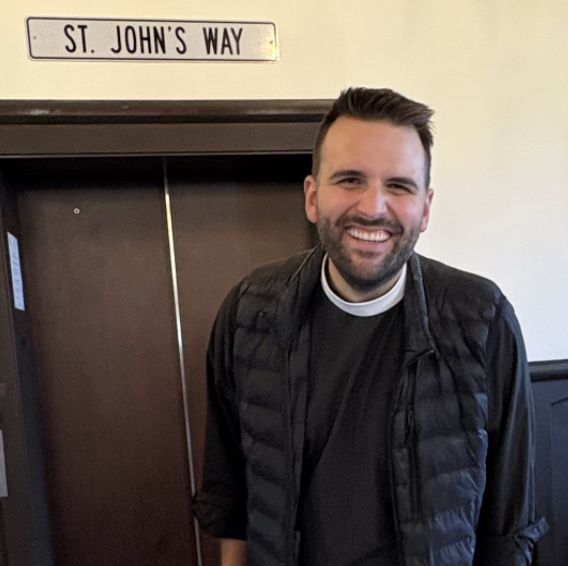
The Reverend Thomas Becker
Father Thomas was born and raised in Newark, Delaware. He holds degrees from Centre College (B.S., Economics), Vanderbilt University (M.Ed., Leadership & Organizational Performance), and Sewanee: The University of the South (M.Div.). Prior to his ordination in 2023, Father Thomas worked in consulting and school-based roles in and around Appalachia, including significant roles in church life, higher education, and boarding schools.
During seminary, he completed field education at St. Paul’s Episcopal Church in Murfreesboro, Tennessee. He later served at Christ Church Cathedral in Lexington and in several roles across the Episcopal Diocese of Delaware. He was called to SJH as Priest-in-Charge in late 2025.
He makes his home in Huntington Station with his beloved mini Aussie, Maggie, well-worn hiking boots, a growing Blenko glass collection, a needlepoint project, and more books than any one human needs to own.
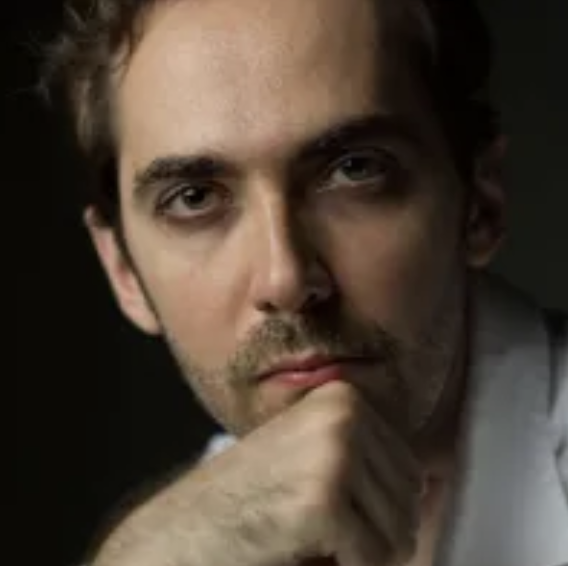
Alex Pryrodny
Alex is a New York City-based pianist, organist, composer, and music director. Originally from Ukraine, he began studying piano at age three and gave his first public performance at six. By his early teens, he had twice won the title of Ukraine’s best young composer, along with international competitions in classical piano, composition, and improvisation.
Alex studied composition and classical piano at the University of Maryland and jazz piano at the New School in New York City. He has performed internationally and was awarded second place at the Montreux Jazz Solo Piano Competition in Switzerland. Whether in church, a concert hall, or a jazz club, Alex’s goal is to use music to inspire, uplift, and bring people together.

Jen Hebert
Jen has been the director of St. John's Nursery School for 15 years. She received her degree from Tufts University, earning a Master's in Early Childhood Education in 1991.
After teaching kindergarten in Massachusetts, Jen returned to Long Island with her husband, Jamie, to start their family. She later worked as a preschool classroom teacher before becoming director. Jen has also served on the Huntington Board of Education and currently serves as a Councilwoman for Huntington and on the Board of Trustees of the Huntington Public Library.
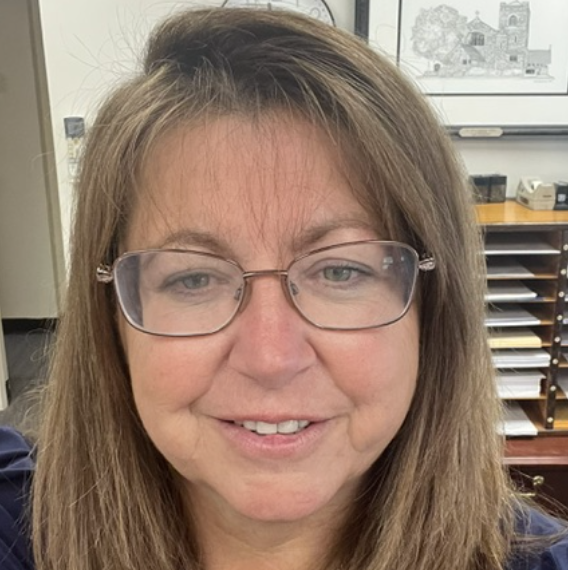
Kathleen Cavallo
Kathleen is our parish's office manager and bookkeeper. With over 15 years of administrative experience, she can be counted on to handle just about everything with a smile. While she loves keeping numbers and the office organized, her absolute favorite part of the job is meeting new people and assisting them however she can!
When she isn’t keeping the office running smoothly, you can usually find Kathleen walking in nature or relaxing with a book on her porch or by the pool.
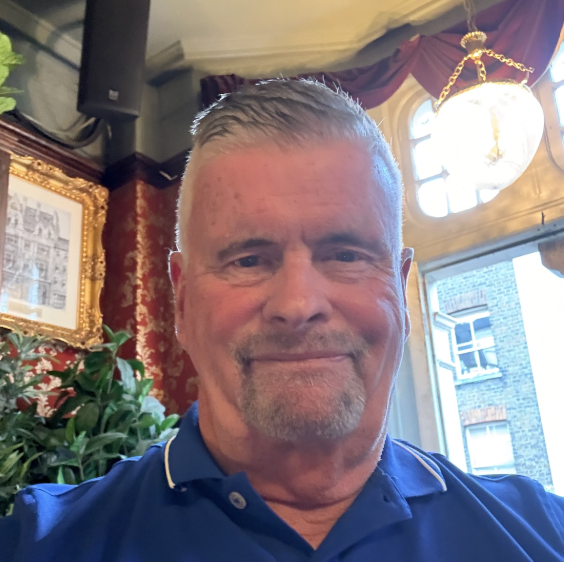
Mike Ade
Mike began as SJH's sexton in 2026, having attended the parish with his husband Sean since 2016 and volunteered in a number of essential roles over his time here. He previously served on the vestry, on the Building & Grounds Committee, and in the Thrift Shop.
He has a strong background in keeping campuses safe and clean, previously holding positions including Vice President for Construction and Design at Nassau University Medical Center, and with SEC Construction Management in public works.
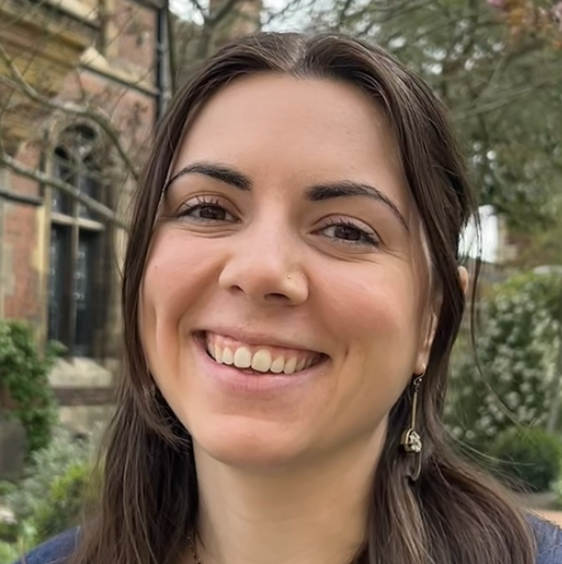
Mary Thompson
Mary assists with all things communications and social media, and she looks forward to creating our liturgical resources each week (especially choosing the artwork for Sunday bulletins)! She earned her master's degree in art history from Hunter College in 2025, focusing on Medieval Christian pilgrimage art with a particular interest in rosary beads.
Mary loves exploring and sharing her faith through art and often shares her knowledge through SJH's social media channels, so be sure to follow us!
Fun Fact: Mary's home parish is Trinity Episcopal Church in Danville, Kentucky, where she met Father Thomas when he was a college student!
Church Leadership
SJH is led by a governing board called the Vestry, a group of deeply committed volunteers. Vestry members may serve two consecutive three-year terms, and Wardens may serve three consecutive two-year terms
2026 Vestry (year of term expiration)
- Lynn Hansen, Warden ’27
- Leslie Valentine, Warden ’28
- Meg Beaufrere ’27
- Mary Beth Dieterle ’28
- Christine Doré ’27
- Liz Peck ’28
- Crystal Roberts ’29
- Alan Schorn ’29
- Sue Waiter ’29
Our History
A short history of St. John’s Church and its place in Huntington.
Early Years in Huntington
For the eighteenth-century Episcopal Church—the established Church of England—Long Island and the other northern colonies were challenging ground. New England had been settled by dissenters, Puritans, and Separatists who viewed the established church with suspicion. Huntington, founded in 1653 by settlers from Connecticut, was a well-ordered town built around the village green in the New England manner, and its church polity was Presbyterian by the middle of the eighteenth century.
In 1701, Thomas Bray and other church leaders helped establish the Society for the Propagation of the Gospel in Foreign Parts, creating a permanent source of support for missionaries in North America. St. George’s Church in Hempstead soon became a center for this work on Long Island.
The Founding of St. John’s First Church
In 1744, the Rev. Samuel Seabury Sr., rector of St. George’s, visited Huntington and found a small group of interested people. On June 21, he baptized Mary Bryan—the first recorded action in what would soon become St. John’s. By the following year, there was enough interest, most notably from Henry Lloyd and his associates, to organize a parish.
Henry Lloyd, Lord of the Manor of Queen’s Village at Lloyd Neck, wished to build an Anglican church in Huntington. Local authorities opposed him, but the new mission continued to grow. In 1748, Samuel Seabury Jr. was appointed Lay Reader and Catechist by the S.P.G. and placed in charge of the mission under his father’s direction. He later became the first bishop of the Episcopal Church.
By 1762, the congregation had grown enough to acquire a house and glebe to support an ordained minister. In 1767, the Rev. James Greaton became St. John’s first settled minister. He described a church so full that some worshippers were obliged to leave for want of room. His congregation included thirty or forty Black worshippers, enslaved or indentured, many attending with their masters and others permitted to come by dissenting households.
Greaton died in 1773 and was buried beneath the chancel. During the Revolutionary War, Huntington was occupied and the church building was used as a stable and barracks, suffering severe damage. Local families nevertheless held occasional services when a clergyman was available.
Post-Revolutionary Era and the Nineteenth Century
After the Revolution, the Episcopal Church struggled to reorganize. St. John’s saw only one recorded baptism between 1783 and 1838. Its fortunes eventually improved, and the parish was incorporated in 1838. The Rev. Isaac Sherwood became its first rector, and the original church—then ninety-one years old—was consecrated by Bishop Onderdonck of New York.
The Second Church
In 1860, the vestry agreed to build a new church on the original site. During demolition, three bodies were found beneath the church floor, one certainly that of James Greaton. Bishop Hobart consecrated the new building on May 6, 1862. In 1868, St. John’s became part of the newly formed Diocese of Long Island.
The parish flourished later in the nineteenth century, improving its building and establishing St. Andrew’s Chapel at Huntington Harbor. In 1905, a workman’s torch accidentally set the church roof ablaze, and the wooden structure was lost. Its furnishings were saved and remain in use in the current building.
The twentieth century brought rapid growth. Grace Chapel was established for families in Huntington Station, a Casavant organ was installed in 1928, and a new Sunday School building was erected in 1964. Through every chapter, St. John’s has remained part of the spiritual and civic life of Huntington.
What Is an Episcopal Church?
The Episcopal Church welcomes all who worship Jesus Christ and includes dioceses and mission areas across many countries and territories.
As the U.S.-based member of the worldwide Anglican Communion, The Episcopal Church belongs to the world’s third-largest group of Christians. We are denominational descendants of—and partners with—the Church of England and the Scottish Episcopal Church.
The mission of the church, as stated in the Book of Common Prayer’s catechism, is “to restore all people to unity with God and each other in Christ.” In step with that mission, The Episcopal Church follows Jesus into loving, liberating, and life-giving relationships with God, with each other, and with the earth.
We are the Episcopal branch of the Jesus Movement.
St. John's Episcopal Church
12 Prospect Street | Huntington, NY 11743
office@stjohnshuntington.org